| |

|
|
UPCOMING MASS CELEBRATIONS
|
|
|
|
|
|
|
|
CHANGES TO SATURDAY MASS IN MAYO FROM MAY 2nd TO OCTOBER 3rd
|
This SUMMER from May 2nd to October 3rd inclusive, on the FIRST Saturday a month only, Mass will NOT be celebrated at St. Malachy's. These days correspond to the First Saturdays: May 2nd, June 6th, September 5th and October 3rd. Instead on these first Saturdays, in place of Mass, there will be a Liturgy of the Word/Communion Service at 5pm. Those parishioners in Mayo who wish to attend Mass, may do so at Our Lady of Victory Parish, twenty minutes away in Buckingham, on the Sunday following at 9 am. There are two exceptions to this change occurring on July 11th and August 8th. AFTER October 3rd, Mass will once again be celebrated at St. Malachy's on Saturday at 5pm. The Liturgy of the Word/Communion Service does fulfill your Sunday obligation, if you are living in Mayo. Thank you! Fr. John.
|
| BANQUE ALIMENTARIRE DE LA LIÈVRE |
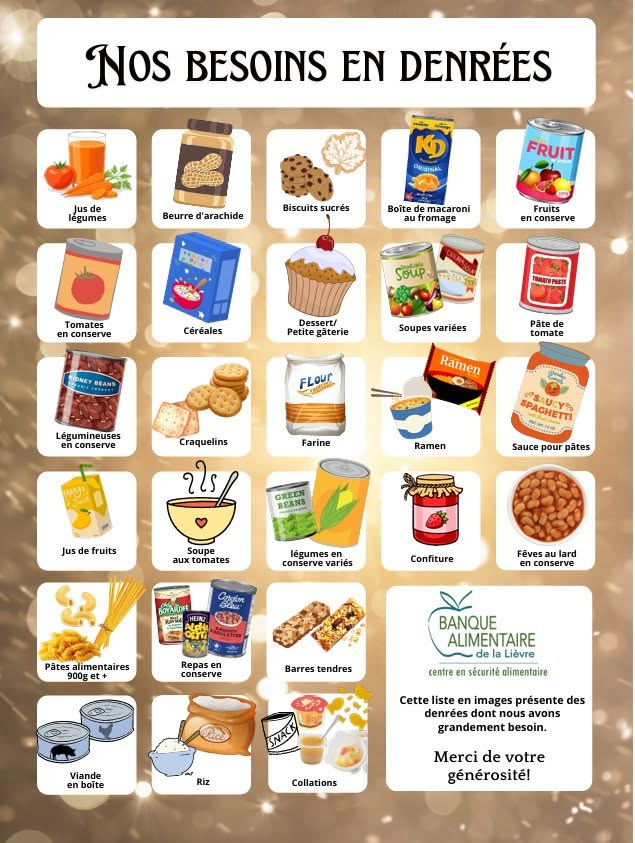
The local food bank, Banque alimentaire de la Lièvre, has recently posted a listing of non-perishable items that are urgently needed:
|
 |
|
- Biscuits
- Canned Beans
- Canned Fruit
- Canned Meat
- Canned Soup
- Canned Tomatoes
- Canned Vegetables
- Cereal
|
- Coffee
- Crackers
- Flour
- Fruit Juice
- Granola Bars
- Jam
- Kraft Dinner
- Oatmeal
|
- Pasta
- Peanut Butter
- Ramen
- Rice
- Spaghetti Sauce
- Toilet Paper
- Vegetable Juice
|
| |
Parishioners are invited to bring donations of non-perishables to our two parishes at the weekend mass celebrations. |
|

THANK YOU MESSAGE
OUR LADY OF KNOCK PILGRIMAGE
Dear parishioners of St. Malachy and all those who so generously contributed to the [2026] Pilgrimage,
I simply wish to thank you for your generous gift of time, energy, talent and creativity and joy. I ought to have included all of you when I thanked the Choir after the last song. It took a team effort to do the many tasks together and it wasn't easier as we age. But neither the rain nor age, prevented our joyous celebration.
I hesitate to single out anyone lest I forget someone!
May the Good Lord and our Lady of Knock bless you and your families for the service done for the pilgrims. The good done to our brothers and sisters bring us all closer to our heavenly home and to Jesus and Mary. There were many, many happy pilgrims yesterday!
With my continued assurance of prayers and gratitude,
Fr. John
|
|
| COLUMBIA EARTHQUAKE - YOUR HELP IS NEEDED NOW |
Responding rapidly to the Colombia earthquake, Development and Peace – Caritas Canada made an initial allocation of $50,000 to help local partners, including Cáritas Colombiana, respond to the emergency.
We also join Pope Leo XIV in his expression of sorrow, in consoling the victims and in praying for the survivors. A telegram sent on his behalf to the Colombian Bishops’ Conference conveyed the Holy Father’s prayer to our Lord to “pour out upon the beloved Colombian people the gifts of spiritual strength and Christian hope.” Now, we are calling Canadians to be the vehicles of that Christian hope by giving generously to help the survivors of the Colombia earthquake. You can donate online at devp.org or send a cheque to: 555 René-Lévesque Blvd. West, 8th Floor Montreal QC H2Z 1B1
|

2026 FALL SUPPER FUNDRAISER
Our Lady of Victory Church
FRIDAY, SEPTEMBER 25th 2026
TO BE HELD IN THE CHURCH HALL
490 Charles Street, Gatineau, QC (Buckingham Sector)
| MENU: |
- Vegetable Soup
- 2 Pork Souvlaki Skewers
- Mixed Julienne Vegetables
- Rice
|
- Bread & Butter
- Warm Apple Crisp for dessert
- Tea and Coffee
|
| TICKETS: |
- On Sale from Aug. 30th to Sept. 20th
- Available from the OLV parish secretary during office hours
- Available at OLV Sunday Morning mass
- NO TICKETS WILL BE SOLD AT THE DOOR
|
| PRICES: |
|
- $15.00 for Children 12 and under
|
| SCHEDULE: |
|
|
 |
September 15, 2026
|
 |
|
| WEBSITE & BULLETIN COMMITTEE |
 |
|
Our parish website and bulletin need to be revamped.
A new committee will be formed to review and recommend updates to our website and weekly bulletin.
If you would like to be part of the committee or have ideas, please leave your name and contact number with the secretary's office.
|
|
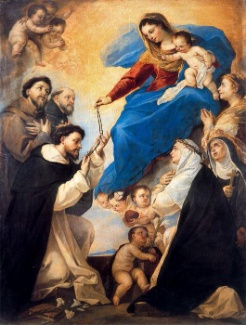
| Rosary Pilgrimage – October 5th 2026 |
 |
|
Pilgrimage together from the church steps of St. Patrick’s Fallowfield to the hall of St. Mary’s Parish, Ottawa.
The 24 km walk will take approximately 7 hours, leaving at 9am and concluding with a potluck reception at St. Mary’s Parish.
Check out the Pilgrimage details and signup: as a walker, check the route and optional start/finish points, express your need for a shuttle or volunteer to shuttle or clean-up, bring a potluck ready to serve dish.
Contact Carole Talgoy at 613-371-6690 or click here to sign up on line.
Come pray with us!
|
|
|
|
UPCOMING ACTIVITIES FOR SENIORS IN BUCKINGHAM |
Connexions is an important support organization for the English-speaking community of the Outaouais. Their mission is to promote the health, social wellbeing, and vitality of the English-speaking community through empowerment, participation and collaboration within the Outaouais.
Connexions has partnered with the local seniors' centre, Centre Action Générations des Aînés, or CAGA as it is better known. Every other Monday morning at 10 am, Connexions will host one-hour activities offered in English at CAGA's location, 390 avenue de Buckingham.
|
UPCOMING EVENTS
|
| Date |
Day |
Time |
Event |
Audience |
Event Type |
|
|
|
|
|
To register, go to centreconnexions.org or call at 819-557-0615.
|
|
| QUEBEC ASSEMBLY OF CATHOLIC BISHOPS |
|
CURRENT FOOD CRISIS |
On the occasion of May 1st, International Workers' Day and the feast of St. Joseph the Worker, the Quebec Assembly of Catholic Bishops invites Christian communities to pay attention to the current food crisis, to analyze the situation in the light of the Gospel, and to consider various courses of action to ensure that everyone has enough to eat. |
IN THE LIGHT OF THE GOSPEL |
Faced with the current food crisis, our Christian communities, which are often already committed to helping the vulnerable, must respond to the call of the hungry. Why should we do so? Because, in doing so, we will be acting for justice, as Jesus Christ taught us, in continuity with the great biblical tradition of commitment to justice.
This interpellation is found in "the multiplication of the loaves". It would be more accurate to speak of "the breaking and distribution of the loaves", i.e. their sharing (partage) in both senses of the word. This sharing is fundamental. It prefigures the Eucharist, since the evangelists use the same words as in the Last Supper to describe Jesus' action of taking the loaves, giving thanks, breaking them, and distributing them to his disciples. Above all, the sharing of the loaves shows us that the ability to adequately feed the hungry, even today, is within our grasp. Indeed, Jesus shows us how to respond with Him to His call, "You give them something to eat", when we can be tempted to leave each individual to his or her own means of feeding themselves. Jesus reminds us that every time we give food and drink to those who are hungry and thirsty, we are doing so to Him, bearing witness to our love and faith. Our Christian ideal is that everyone should have enough to eat. How can we achieve this, or at least come close? The first step is to take a close look at the resources available. This is the kind of counting Jesus encourages: "How many loaves have you? Go and see." Then we need to organize a fair redistribution of resources, that is, a sharing inspired and guided by the God of love and mercy, who has given goods a universal destination and to whom we bring the little we have. This sharing involves the formation of small groups, thanksgiving, the involvement of the disciples, the actual redistribution, and, finally, the gathering of the surplus, which will once again fulfill the Lord's word quoted by the prophet Elisha: "They shall eat and have some left."
|
|
POLICY FOR THE PROTECTION OF CHILDREN AND VULNERABLE PERSONS
IN THE ARCHDIOCESE OF GATINEAU
For the sake of the little ones (Pr 31:9) …protect minors and vulnerable adults
|
| Message from the Diocesan Coordinator for Establishing Safe Environments
|
Hello everyone, I have just about completed two visits of each French and English parish, presenting the Diocesan Guide for the implementation of measures to make our parishes safe for minors and vulnerable persons, and to protect them from other types of harm (theft, fraud, breach of confidentiality, harassment, etc.). These meetings also allowed for the presentation of concrete tools for putting these safety measures in place.
Just a reminder that this project is a diocesan priority and is compulsory, affecting both volunteers and paid staff, including priests.
As a Christian community we can be proud, to finally make this significant change, assuring all parishioners served by their parish, whether young, old, or vulnerable, that they can feel (fully) secure.
|
| |
Code of Ethics and Conduct
The diocese and parishes have adopted a code of ethics and conduct. Why? Remember what Jesus said, "By this everyone will know that you are my disciples, if you have love for one another". (John 13:34-35). Are our attitudes and actions toward others always in keeping with the values of the Gospel? Working and being of service in a parish means being attentive and concerned for others, especially when relating to those who are most vulnerable. Adopting a code of ethics and conduct means adopting values that help us remember and live Jesus' message to, "Love one another".
Our First Value - Human dignity
To behave towards others with courtesy, and kindness. It means helping each other and listening. When we disrespect, belittle, harass, or humiliate another person with words and gestures, we deeply wound them in their dignity. Be attentive so that our relationships are healthy and respectful.
Our Second Value - Autonomy and Self determination
No matter where we come from, how we were brought up, or what we are capable of, each one of us has the right to express themselves, to make their own choices, to act and think for themselves. This is what the value of autonomy and self-determination in our Code of ethics means. Encourage your peers to express themselves and discuss their opinions. It is not always easy to accept having our ideas questioned by people whose opinions or experiences are different from our own. Of course, this needs to be done respectfully, that is, in consideration of others' existence, ideas, and opinions. Maintaining prejudices, violating the right to speak, seeking to control others are just some examples of not living up to this value. "Love one another with mutual affection" (Romans 12:10). With the people we serve and in our relationships with volunteers and employees, let's encourage one another to express ourselves and share our points of view.
Our Third Value - Personal safety
The 3rd value in our Code of Ethics and Conduct, mentions the importance of adopting physical contact that respects people's comfort level, especially if they are minors or vulnerable. How do we approach others? Are we still in the era of hugs? We have to have personal limits. These are influenced in particular by our culture and upbringing, and also, for priests, by an awareness of their authority in the Church. Jesus himself exercised authority: "Jesus spoke with authority", as the Scriptures say. The healthy authority that priests must exercise in their ministry is that of Jesus: an authority that empowers others, that listens, that inspires trust and action, that makes people want to follow, that gives them responsibility and makes them aware of their own resources. Jesus did not condemn or judge; his authority was to serve, to lift up, to liberate. Let us be mindful of the distances we need to take from people who are living in a vulnerable situation. Let's behave safely with them. I'll come back to this in a future article.
Our Fourth Value - Confidentiality
We don't always realize how much damage is done when there is a breach of confidentiality. In this time of social media when financial institutions lose personal information, the protection of an individual's private information is paramount. Discretion goes beyond being a good quality, it is now an obligation. A person who speaks with the secretary, with the priest, who confides in a volunteer, expects that what she/he has shared will be respected and remain confidential. What if the secretary discovers in the baptismal records that a child's parents are not the ones, she/he thought they were, and he/she reveals that information! What if a person confides in a volunteer that they were abused as a child and that information gets out to the group of volunteers! Even the simplest type of personal data is confidential. If the person hasn't given permission to share it, it should not be communicated to others. During committee meetings when an individual parishioner or volunteer is being discussed, always ask yourself, is it necessary to name the person? To share their personal information? To reveal all the information we have? If it is absolutely necessary, share as little as possible. A breach of confidentiality is potentially very damaging. Think about it!
Our Fifth Value - Loyalty and Integrity
"You shall not steal", God's 7th commandment. In a way, you might say that this commandment summarizes the 5th and last value in our Code of Ethics and Conduct: Loyalty and Integrity! Being honest and loyal. Do what is right. This last value seems to touch on all the expected behaviours included in our Code of ethics: act with respect, honesty, justice, fairness, confidentiality, etc. The parish must be able to place its trust in its employees and volunteers.
To have integrity is to rigorously observe, in all one's actions, the principles of justice and morality. Big words to say what exactly? They can trust me, I am a responsible person and I own the choices and decisions I make, I show gratitude towards others, I admit my mistakes, I don't take parish donations for myself, I don't use social networks to post malicious criticisms or insinuations about my parish or its employees and volunteers. A person of integrity is also someone who willingly offers to help, who is sincere in both words and actions. Finally, it also means that I will denounce any inappropriate behaviour, abusive language or gestures, especially when made towards minors or vulnerable persons.
|
|
Chantale Duguay, Diocesan Coordinator for Establishing Safe Environments
|
NEW FROM THE DIOCESE
A FACEBOOK PAGE AND BLOG ADDRESSED TO OUR ENGLISH LANGUAGE PARISHIONERS
|
The archdiocese has launched a new Facebook page specifically addressed to our English-language parishioners. You don't need to have an account to see posts, only if you want to comment, share and like them.
See the internet link: https://www.facebook.com/archgat
|
We also launched a new English-language blog entitled "Together on the Way". We'll be posting longer articles here, reflections and testimonies. If you want to share a story about something going on in your parish, please feel free to contact our communications team at the diocese.
See the internet link: https://archgatblog.blogspot.com/
|
|
|
|
TWENTY-FIFTH SUNDAY IN ORDINARY TIME – September 20th, 2026
|
First Reading:
Responsorial Psalm:
Second Reading:
Gospel:
|
Isaish 55.6-9
The Lord is near to all who call on him.
Philippians 1.20-24,27
Matthew 20-1-16
|
|
|
FATHER JOHN’S MESSAGE
Twenty-Fifth Sunday in Ordinary Time A
When the householder went out into the marketplace to look for workers in his vineyard, he went out himself to look for the workers and called them personally to work for him. He also took the initiative to work out the labor contract himself. All this highlights how personally the Lord calls each of us to work in the Kingdom of God. Many of us were baptized before we could make a free choice of Him. But those of us who have persevered, in the faith, have done just that. He knows the great labor it cost him to save us. He wishes that we become co-responsible for the work in the vineyard, which is his Church and in the world. The Lord needs your labor, the Church needs your gifts, the world needs your ministry. No matter your age, how can you offer your gifts for the work in the Lord’s vineyard?
Peace. Fr. John
|
|
<< BACK
FWD >>
|